Vibrio Infection Symptoms: Wounds, Seafood and Seawater
A wound exposed to seawater or brackish water that becomes red, swollen and very painful with fever, blisters or skin turning dark, or confusion or dizziness after eating raw shellfish, means call 911 or go to the emergency department.
This page explains where these infections come from, which blood markers a clinician may check during an assessment, and what blood work cannot answer on its own. It is educational and is not medical advice.
What can set off these symptoms?
Stomach upset after a meal, or redness around a cut, has many everyday explanations, and seawater or shellfish exposure is one branch of that list. Before anyone reaches for a lab panel, it is worth laying out the ordinary causes that sit behind the same symptoms.
Everyday explanations include the following.
- Other foodborne germs picked up from a shared meal or a restaurant kitchen.
- A viral stomach bug passed between household members, which can bring cramps, nausea and loose stools.
- A large, rich or unfamiliar meal, or a heavy alcohol night, which can leave the gut unsettled.
- Travel and a change in water, food handling or routine.
- Some medicines that unsettle the stomach. Ask your prescriber rather than stopping anything on your own.
- A scrape, blister or insect bite that picked up ordinary skin bacteria while healing.
- Short sleep, a heavy training block and sustained stress, which change how depleted you feel while your body handles any infection.
None of those show up as a single line on a blood panel. They are history and context, which is why a clinician asks what you ate, where you swam and when the symptoms started.
The seafood and seawater branch works through two separate routes. The first is swallowing the organism in raw or undercooked shellfish, which can bring watery diarrhea, abdominal cramps, nausea and vomiting. Research suggests that foodborne Vibrio parahaemolyticus infection, a close relative, is associated with eating raw or undercooked shellfish, and that prevention rests on cooking, chilling and keeping raw seafood away from ready-to-eat food 1. Studies indicate that Vibrio species can be detected in fish and seafood sampled across many regions, which is why handling and cooking practices matter at home as well as in a kitchen 2.
The second route is skin. A cut, graze, fresh piercing, new tattoo or surgical wound that meets warm seawater or brackish water can become infected, and the area can turn red, swollen, hot and painful out of proportion to the size of the original injury. Research suggests that skin infection with Vibrio vulnificus can range from a mild local reaction to severe soft tissue infection that needs hospital care 3. A systematic review and meta-analysis of non-cholera Vibrio infections describes both gastrointestinal illness and wound infection as recognised presentations 4.
Which blood tests can help explain it?
Blood tests do not name the organism, but they describe how the body is responding and how other systems are holding up. Two markers come up again and again when a clinician assesses a suspected wound or foodborne infection.
| Marker | Why it relates to these symptoms | What a result can and cannot tell you |
|---|---|---|
| Total WBCs (white blood cell count) | White blood cells are the circulating part of the immune response, so the count can move when the body is dealing with infection or marked physical stress. | It can show that an immune response is under way and give a clinician something to track over time. It cannot name the organism, locate the infection or rule one out on its own. |
| Creatinine | Creatinine is a waste product of muscle turnover that the kidneys filter out, so the blood level reflects how well filtration is keeping up during illness, vomiting or fluid loss. | It can show that kidney filtration is under strain and is worth repeating during an acute illness. It cannot separate dehydration from other reasons for a change, and it shifts with muscle mass and diet. |
Compare any value with the range printed on your own lab report. Printed ranges vary by laboratory, and they also vary with age and sex, so the same number can sit inside one report's range and outside another's. A value outside the printed range is worth discussing with a clinician, who decides what it reflects in your situation.
Can a white blood cell count show how your body is responding to an infection?
A white blood cell count can show that an immune response is under way, but it cannot tell you what is driving it. White blood cells circulate as several types, and neutrophils are the group that moves first when bacteria get past the skin barrier or the gut lining. When an infection takes hold in tissue, the bone marrow can release more of these cells, and the total count can climb. In severe illness the count can also fall, which is one reason a single reading is less informative than a reading taken alongside the examination and repeated later.
This is why Total WBCs sits on nearly every acute assessment panel. In a wound that is red, swollen and painful after water exposure, the count is one input next to the appearance of the skin, the level of pain, the temperature and the person's medical history. Research suggests that Vibrio vulnificus skin infection spans a wide spectrum, from limited inflammation to deep soft tissue involvement, so appearance and progression carry weight alongside any number 3.
Plenty of things besides infection move a white cell count. A hard training session or a long race can lift it for hours. Physical stress, a recent injury, smoking and pregnancy can shift it, and some medicines change it as well, which is a question for your prescriber. Because of that, a count slightly outside the printed range in someone who feels well is a conversation starter rather than an answer, and a count inside the range in someone with a hot, spreading wound does not settle anything.
Why would a clinician check creatinine during a severe infection?
Creatinine is checked because the kidneys are one of the first systems to show strain when fluid loss or a serious infection lowers blood flow. Muscle tissue produces creatinine at a fairly steady rate, the kidneys filter it into urine, and the blood level reflects the balance between those two. Vomiting, watery diarrhea and poor fluid intake reduce circulating volume, filtration drops, and creatinine in the blood can rise. In a severe soft tissue infection, falling blood pressure can do the same thing.
That is the practical reason Creatinine appears on acute panels next to the white cell count. One value gives a snapshot, and a repeat value a day later shows direction, which is more useful during an illness than any single reading. Research suggests that severe Vibrio vulnificus soft tissue infection is associated with substantial illness, and a systematic review and meta-analysis of fatal necrotizing skin and soft-tissue infections describes seawater contact and seafood exposure among the recognised routes 5.
Several ordinary things change creatinine without any infection. More muscle mass raises it, and a long period of low activity lowers it. A large meat meal before the draw can nudge it up, as can heavy resistance training in the days before. Hydration status moves it in both directions, and some medicines alter it, which again belongs with your prescriber. Age and sex influence the printed range too, which is why the number is read against the report in front of you rather than against a friend's result.
Who faces a higher risk, and how can exposure be reduced?
Risk is not spread evenly, and the clearest pattern involves the liver. Research suggests that hepatic disease is associated with higher mortality in Vibrio vulnificus necrotizing skin and soft tissue infections 6. In people with liver disease, a weakened immune system or another chronic condition that affects immune defences, a clinician may advise avoiding raw shellfish entirely and keeping open skin out of seawater and brackish water. That advice is individual, so it belongs in a conversation with the clinician who knows the full history.
For the kitchen, the practical steps are the ones that apply to any seafood handling. Cook shellfish through rather than relying on appearance alone, and keep cooked seafood away from the boards, plates and utensils that held it raw. Chill seafood promptly and keep it cold until it is cooked. Research suggests that prevention of foodborne Vibrio parahaemolyticus infection rests on cooking, temperature control and avoiding cross-contamination 1. Lemon juice, hot sauce and alcohol do not remove bacteria from raw shellfish.
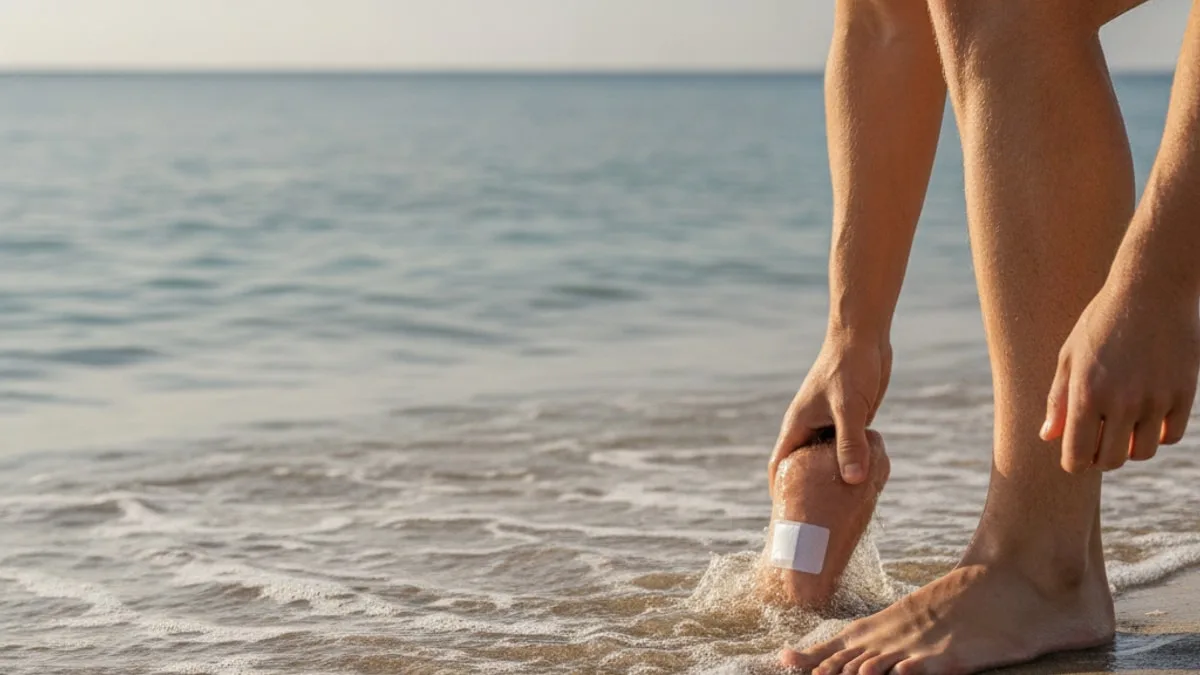
For the water, the same logic applies to skin. Keep cuts, grazes, fresh piercings, new tattoos and healing surgical wounds out of seawater and brackish water, or cover them with a waterproof dressing before going in. Wash any wound with soap and clean running water after water contact, and wear protective gloves when shucking or handling raw shellfish, since shells cut easily.
What can a normal panel still miss?
A panel that reads inside the printed ranges does not rule out an infection, and it never identifies the organism. Cultures of wound fluid, blood or stool are the tests that point at a specific bacterium, and a clinician decides whether to send them based on the history and the examination. Blood work is a description of the body's response, not an identification of the cause.
Timing is another limit. Blood drawn very early in an illness can look unremarkable while the infection is still establishing, which is why a clinician may repeat a count rather than rely on the first one. A single draw also cannot capture direction, and in an acute illness direction matters more than the starting point.
Some of the most important information has no blood test at all. How fast redness is spreading across skin, whether pain is out of proportion to what the skin looks like, whether blisters are forming, how much fluid has been lost and how alert a person is are all observations, not markers. A membership lab panel drawn at a lab appointment is also the wrong tool for an illness happening right now. Suspected Vibrio infection is assessed in person, with labs ordered by the clinician who is examining the wound or the person.
Routine panels are useful in a different way. They establish what your own baseline looks like when you are well, so that a value drawn during an illness can be read against your previous numbers rather than against a printed range alone.
When should you see a clinician quickly?
Some signs need emergency care rather than a phone call. These mean call 911 or go to the emergency department.
- A wound exposed to seawater or brackish water that becomes red, swollen and very painful, with fever.
- Blisters forming over an inflamed area, or skin turning dark, purple or grey.
- Redness that is visibly spreading across the skin over hours.
- Confusion, disorientation or dizziness after eating raw shellfish.
- Fainting or passing out.
- Chest pain or pressure.
- Trouble breathing.
Other situations call for a same-day contact with a clinician rather than waiting.
- Diarrhea and vomiting that are not easing, or difficulty keeping fluids down.
- A fever that starts after a seafood meal or after water exposure.
- Any new soreness, warmth or redness around a cut, piercing or tattoo that met seawater or brackish water, even if it looks minor.
- Blood in the stool, or abdominal pain that keeps building.
- Any of the above in people with liver disease, a weakened immune system or another chronic condition that affects immune defences, where a lower threshold for being seen is reasonable.
Do not try to work out which organism is involved from a search result. Describe the exposure, the timing and the appearance of the skin to a clinician, who examines the area, decides which tests are needed and decides on any next step. Treatment decisions belong to a licensed provider.
If you are having thoughts of self-harm, call or text 988 (US) or your local emergency number now.
How can you check these markers?
Both markers on this page sit on a standard blood panel, and both are included in the FitScript Essential panel, part of a membership built around 150+ biomarkers tested per year. That gives you a white cell count and a creatinine value measured while you are well, which is the comparison point an acute result is read against later.
Atlas, FitScript's AI health advisor, explains each result in plain language, including what moves the marker and what a value outside the printed range can and cannot indicate. A licensed clinician reviews the picture and decides on any further testing or next step, and anything happening acutely is handled in person rather than through a scheduled draw. Discuss your results and any treatment with a clinician or licensed provider.
Key takeaways
- Vibrio vulnificus reaches people two ways, through raw or undercooked shellfish and through water contact with broken skin.
- A seawater-exposed wound that turns red, swollen and very painful with fever, blisters or darkening skin means call 911 or go to the emergency department.
- White cell count and creatinine describe how the body is responding and how the kidneys are coping, and neither names the organism.
- Cultures ordered by a clinician are the tests that point at a specific bacterium.
- Risk is not the same for everyone, and research suggests that hepatic disease is associated with higher mortality in Vibrio vulnificus necrotizing skin and soft tissue infections 6.
- Cooking shellfish through, avoiding cross-contamination and covering wounds before water contact are the practical prevention steps.
If the meal rather than the water looks like the trigger, our guide to food poisoning symptoms walks through the wider picture of foodborne illness, and if the skin is the main problem, cellulitis symptoms explains how a spreading skin infection is assessed.
References
- Epidemiology, pathogenesis, and prevention of foodborne Vibrio parahaemolyticus infections. Foodborne Pathogens and Disease, 2004.
- A systematic review, meta-analysis and meta-regression of the global prevalence of foodborne Vibrio spp. infection in fishes: A persistent public health concern. Marine Pollution Bulletin, 2023.
- Vibrio vulnificus: Review of Mild to Life-threatening Skin Infections. Cutis, 2021.
- Non-cholera Vibrio infections in Southeast Asia: A systematic review and meta-analysis. Journal of Infection and Public Health, 2024.
- Distribution of Fatal Vibrio Vulnificus Necrotizing Skin and Soft-Tissue Infections: A Systematic Review and Meta-Analysis. Medicine, 2016.
- Hepatic disease and the risk of mortality of Vibrio vulnificus necrotizing skin and soft tissue infections: A systematic review and meta-analysis. PLoS One, 2019.
Common questions
What is vibriosis?
Vibriosis is the name for illness caused by Vibrio bacteria, a group that lives in warm coastal and brackish water. People can be exposed by eating raw or undercooked shellfish, or when seawater meets a cut or other break in the skin. A clinician confirms what is going on through examination and cultures.
What are vibriosis symptoms?
Vibriosis symptoms can fall into two patterns. After raw or undercooked shellfish, there can be watery diarrhea, abdominal cramps, nausea, vomiting and fever. After water contact with a wound, the skin around the injury can become red, swollen, hot and painful, sometimes with blisters. A clinician decides what any pattern reflects.
How does a vibrio infection happen?
A vibrio infection starts with exposure to the bacteria, either swallowed in raw or undercooked shellfish or introduced through broken skin during contact with seawater or brackish water. Fresh cuts, piercings, tattoos and healing surgical wounds are entry points. Covering wounds and cooking shellfish through are the practical ways to reduce exposure.
How soon after eating raw shellfish can symptoms start?
Symptoms can begin the same day or over the following days, and the timing varies from person to person. Note when you ate and what you ate, because that history helps a clinician far more than guessing at an organism. Confusion or dizziness after eating raw shellfish means call 911 or go to the emergency department.
Does lemon juice, hot sauce or alcohol make raw oysters safer?
No. Lemon juice, hot sauce and alcohol do not remove bacteria from raw shellfish. Cooking shellfish through and keeping raw seafood away from cooked food and shared utensils are the steps that reduce exposure. If you want personal guidance on raw shellfish, ask the clinician who knows your medical history.
Who should be more careful around raw shellfish and seawater?
People with liver disease, a weakened immune system or another chronic condition affecting immune defences can face more serious illness, and a clinician may advise avoiding raw shellfish and keeping open skin out of seawater. That decision is individual. Bring it up at your next appointment rather than deciding alone.
Which blood tests might a clinician order for a suspected vibrio infection?
A clinician may check a total white blood cell count to see whether an immune response is under way, and creatinine to see how kidney filtration is holding up during fluid loss or serious illness. Cultures of wound fluid, blood or stool are the tests that point at a specific organism. The clinician decides which to send.
Can you swim with a healing wound or a new tattoo?
Keep cuts, grazes, fresh piercings, new tattoos and healing surgical wounds out of seawater and brackish water, or cover them with a waterproof dressing before entering. Wash the area with soap and clean running water afterwards. If the skin becomes sore, warm or red in the days after, contact a clinician the same day.