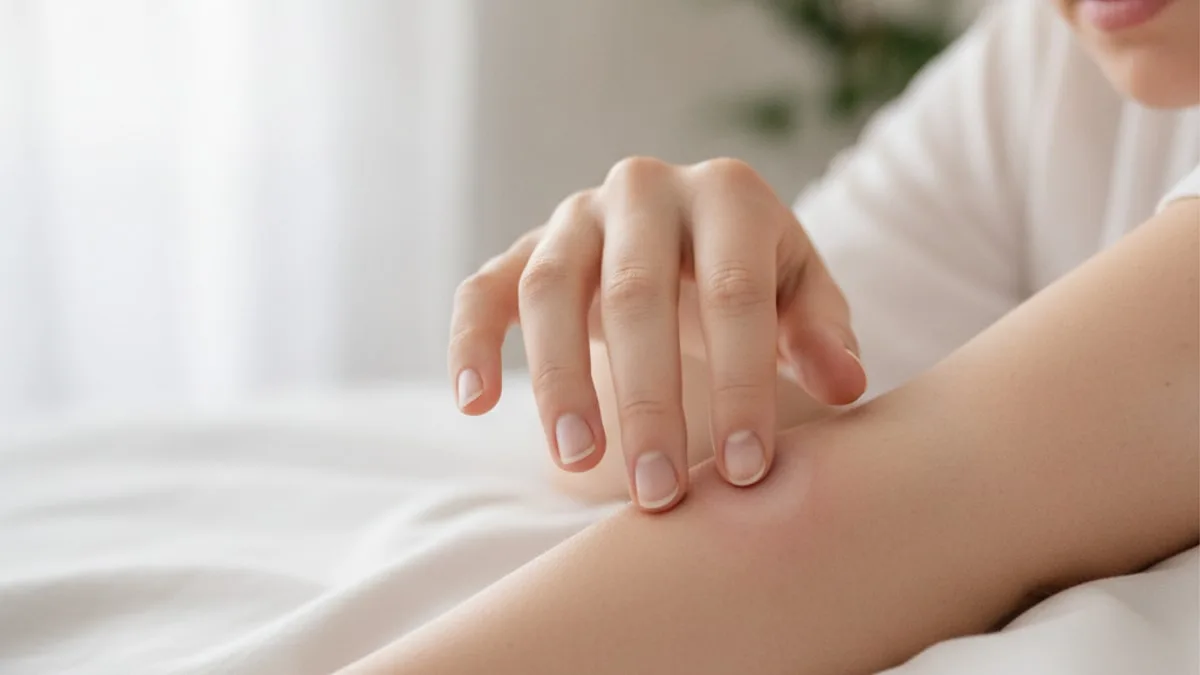
Infected Wound: Signs to Watch For
Red streaks spreading from a wound, fever with chills, or skin around the wound turning dark or numb means call 911 or go to the emergency department.
The sections below cover the changes you can see and feel, the blood markers a clinician can check alongside them, what a clean panel still cannot see, and the signs that need care without delay. This page is educational and is not medical advice.
What can make a wound become infected?
A wound becomes infected when bacteria from the skin or the environment get through the broken barrier, settle into living tissue and multiply faster than the immune system clears them. Every open wound carries bacteria on its surface. Infection is the point at which those bacteria invade the tissue underneath and provoke a response you can see and feel.
How the wound happened shapes the risk. A scrape that picked up grit, a puncture that sealed over at the surface, an animal or human bite, a burn, a surgical incision and a blister that tore open all start from different levels of contamination and different depths. Debris left inside a wound gives bacteria a sheltered place to sit, which is one reason a clinician asks what the injury was and what was in it.
The skin barrier itself is the first part of the story. A review of cellulitis describes breaks in the skin, including cuts, cracks between the toes, ulcers and other wounds, as the entry points through which bacteria reach the deeper layers 1. Studies suggest that leg swelling, a previous episode in the same area, obesity and fungal infection between the toes are associated with a higher chance of developing cellulitis 2. Long standing swelling of a limb is described as a factor in repeated episodes 3.
Then there is the part of the day nobody files under medicine. Footwear that rubs, a dressing that stays damp, a wound that keeps reopening over a knuckle or a knee, training that drags a healing graze across a mat or a bar, and picking at a scab all reinjure the same spot before it can close. Sleep, protein intake and overall training load are part of what a clinician asks about, because tissue repair draws on the same resources as the rest of your recovery.
Background health sits underneath all of it. Reduced blood flow to the legs and feet, long standing swelling, blood sugar that runs high, smoking and older age all come up when a history is taken. Some medicines change how the immune system responds to bacteria, so ask your prescriber about yours rather than changing anything on your own.
One point is worth holding onto before the lab talk starts. Wound infection is judged mainly on what the wound and the person look like, and no single laboratory test settles it 4. Blood tests sit alongside that judgement rather than replacing it.
Which blood tests can help explain it?
Blood tests can support a clinician's read of an infected wound, and they cannot make the call on their own. Diagnosis rests on clinical signs such as increasing pain, spreading redness, swelling, purulent discharge and a wound that stops making progress 4. Two markers come up again and again when a wound is being assessed.
| Marker | Why it is linked to this symptom | What a result can and cannot tell you |
|---|---|---|
| Total WBCs | White blood cells are the cells that respond when bacteria invade tissue, and the bone marrow can release more of them during an infection. | A raised count can add weight to a clinician's impression of infection. It cannot name the cause, and a count inside your printed range does not clear a wound. |
| Fasting Glucose | Blood sugar shapes the environment a wound heals in, and it is one of the background factors a clinician asks about with slow healing skin. | It reflects blood sugar at one fasting moment. It cannot show what is happening inside the wound, and one value is not a diagnosis. |
Compare any number with the range printed on your own lab report, which varies by lab, age and sex. A value outside that printed range is worth discussing with a clinician, who decides what it reflects for you. Research suggests that in uncomplicated skin infection, routine blood testing adds little to what the examination already gives 5.
Can a raised white blood cell count point to wound infection?
It can add weight to the picture, and on its own it settles nothing. The total white blood cell count measures the circulating cells that deal with bacteria in tissue. When bacteria get past the skin, neutrophils move out of the bloodstream into the area and the marrow releases replacements, so the number in a blood sample can rise while that is happening.
The limits are as useful to know as the signal. An emergency medicine review reports that laboratory testing, including the white cell count, is not required in uncomplicated cellulitis and has limited value for making the diagnosis 5. A review of current practice guidelines makes a similar point about separating true cellulitis from the conditions that resemble it, where the examination carries more weight than a number 6.
Plenty of other things move this marker. A hard training session, acute stress, smoking, another infection elsewhere in the body, pregnancy (ask your OB or midwife) and some medicines (ask your prescriber) can all shift it in one direction or the other. A count can also sit below the printed range for reasons that have nothing to do with the wound in front of you.
So read it in sequence. The observation is a number on a report. What it may reflect is immune activity somewhere in the body, not necessarily at the wound itself. The next step is to bring it to a clinician together with the wound, because the wound carries more of the answer than the number does. You can see what the marker measures on the Total WBCs page.
Does blood sugar affect how a wound heals?
Yes. Blood sugar that runs high over time is one of the background factors linked with slower tissue repair and with skin and soft tissue infection. Research suggests that diabetes is among the host conditions that make the diagnosis and management of wound infection harder 4. Diabetes is also listed among the conditions that raise the chance of cellulitis 3.
Several threads run together here. Higher glucose can affect how efficiently neutrophils do their job at the wound edge. Changes in small blood vessels can limit how much blood, oxygen and immune cells reach the tissue that needs to rebuild. Reduced sensation in the feet can mean an injury goes unnoticed for days, so in people with diabetes a foot wound can be deeper and further along by the time it is found.
Fasting glucose is a single moment rather than a trend. It is the reading taken after an overnight fast, before the day's food and movement have moved it. A meal or sugary drink too close to the draw, a short night, acute stress and another illness can all change it. An infection that is already running can push glucose up on its own, which is one reason a single high fasting value during an active wound problem is a reason to retest later rather than to conclude anything.
The sequence is the same as before. The observation is a fasting number. What it may reflect is how the body is handling sugar on that morning, which is part of the terrain a wound is healing in. The next step is to discuss the value with a clinician, who may want a measure that reflects blood sugar over months rather than one morning. The Fasting Glucose page explains what the test covers.
What can a normal panel still miss?
A great deal, because blood work never looks at the wound. A panel describes the body around the injury, not the injury.
It cannot see a pocket of pus under the skin. An abscess can sit beneath an area that looks like simple redness, and an emergency department review describes drainage as the decision point for that situation, which is a clinician's procedure rather than anything handled at home 5. Blood work also cannot see foreign material left in a wound, involvement of tendon or bone, or a wound that is deeper than its opening suggests.
It cannot name the bacteria either. Whether a swab, a culture or imaging is worth doing is a clinical decision made from the wound and the history rather than from a blood panel 4.
And a panel cannot separate infection from the conditions that imitate it. Evidence suggests that stasis dermatitis, contact dermatitis, deep vein thrombosis and gout are mistaken for cellulitis 7. Redness appearing on both lower legs at the same time points away from cellulitis and toward one of those look alikes 7. Reviews describe cellulitis as a clinical diagnosis built from appearance, history and examination 8, with laboratory results playing a supporting part at best 2.
The plain daily details are invisible to any blood draw too. No marker shows that a dressing is staying wet, that a shoe is pressing on the exact spot, that a wound is reopening every time you train, or that grit was never fully rinsed out.
When should you see a clinician quickly?
Some signs need emergency care now, and a separate set needs an in person appointment the same day. Nothing on either list is something to watch and wait on.
Call 911 or go to the emergency department for any of the following.
- Red streaks running from the wound toward the body
- Fever with chills
- Skin around the wound turning dark, grey or blue, or going numb
- Pain that is far out of proportion to how the wound looks
- New confusion, or difficulty staying awake
- Fainting or passing out
- Chest pain or pressure
- Trouble breathing
Contact a clinician for a same day, in person look for any of these.
- Pus or thick cloudy drainage from the wound
- Redness, warmth or swelling spreading beyond the wound edges
- Pain that grows day after day instead of easing
- Wound edges pulling apart, or a wound that stops closing
- A new foul smell from the wound or the dressing
- A bite, a deep puncture, or a wound with debris you cannot rinse away
- Any foot wound in people with diabetes, nerve symptoms in the feet or poor circulation, even a small one
- A wound in people taking some medicines that change the immune response (ask your prescriber)
- A changing wound in a child (ask your child's pediatrician), or a wound during pregnancy (ask your OB or midwife)
Do not try to name the problem yourself from a photograph or a single lab value. A clinician examines the wound, decides whether a swab, imaging or a procedure is needed, and decides on any treatment. Discuss any result or any treatment with a clinician or licensed provider before acting on it.
If you are having thoughts of self-harm, call or text 988 (US) or your local emergency number now.
How can you check these markers?
Both markers on this page come from one routine blood draw. The FitScript Essential panel measures total white blood cells and fasting glucose alongside the rest of a baseline blood count and metabolic picture, so you are reading them together rather than one at a time.
FitScript membership covers 150+ biomarkers tested per year, and Atlas, the AI health advisor, explains each result in plain language, including what a value sitting outside the range printed on your report may reflect and what is worth raising with a clinician.
Testing does not decide anything by itself. A licensed provider reviews the results next to the wound and the rest of your history, and treatment decisions belong to a licensed provider. If a wound is changing right now, the examination comes first and the blood work second.
Key takeaways
- An infected wound can show spreading redness, warmth, swelling, pain that grows, pus or cloudy drainage, a new smell, and a wound that stops closing.
- Diagnosis of wound infection rests on clinical signs rather than on a single laboratory test 4.
- Breaks in the skin barrier act as entry points for bacteria, and leg swelling, obesity, prior episodes and athlete's foot are linked with a higher chance of cellulitis 1 2.
- A white blood cell count can support the picture, and routine blood testing is not required in uncomplicated cellulitis 5.
- Blood sugar is part of the terrain a wound heals in.
- Other conditions imitate cellulitis, and redness on both lower legs at once points away from infection 7.
- Red streaks, fever with chills, or skin turning dark or numb mean call 911 or go to the emergency department.
References
- Clinical practice. Cellulitis. The New England Journal of Medicine, 2004.
- Cellulitis: A Review. JAMA, 2016.
- Cellulitis: current insights into pathophysiology and clinical management. The Netherlands Journal of Medicine, 2017.
- Challenges in the diagnosis and management of wound infection. The British Journal of Dermatology, 2022.
- Diagnosis and Management of Cellulitis and Abscess in the Emergency Department Setting: An Evidence-Based Review. The Journal of Emergency Medicine, 2022.
- Cellulitis: A Review of Current Practice Guidelines and Differentiation from Pseudocellulitis. American Journal of Clinical Dermatology, 2022.
- Clinical Mimics: An Emergency Medicine-Focused Review of Cellulitis Mimics. The Journal of Emergency Medicine, 2017.
- Cellulitis: A Review of Pathogenesis, Diagnosis, and Management. The Medical Clinics of North America, 2021.
Common questions
What are the signs a wound is infected?
Signs a wound is infected include redness and swelling that spread beyond the edges, warmth, pain that grows rather than eases, pus or cloudy drainage, and a wound that stops closing. Contact a clinician the same day. Red streaks, fever with chills, or dark or numb skin mean call 911 or go to the emergency department.
What blood tests do clinicians check when a wound looks infected?
A white blood cell count and fasting glucose are two markers a clinician can check. The white cell count reflects immune activity somewhere in the body, not only at the wound. Fasting glucose reflects blood sugar at one moment, which is part of the environment tissue repairs in. A clinician decides which tests fit your situation.
Can a normal white blood cell count rule out a wound infection?
No. A count inside the range printed on your lab report does not clear a wound, because the assessment is made from the wound itself and how you feel. A raised count does not name a cause either. Bring both the number and the wound to a clinician.
How long does it take for a wound to show signs of infection?
It varies with the wound, its depth and the person, so there is no set timeline. Watch the direction of change instead of the calendar. Pain, redness and swelling that increase after the first days, or drainage that turns thick and cloudy, are reasons to contact a clinician the same day.
Is clear fluid draining from a wound a sign of infection?
Clear or straw coloured fluid can appear while a wound is closing. Thick, cloudy, yellow or green drainage, especially alongside growing pain or a new smell, is a reason to be seen the same day. A clinician looks at the wound and decides whether a swab or any other test is needed.
Does an infected wound always come with a fever?
No. Skin changes around a wound can appear with no change in temperature at all. Judge the wound by redness, swelling, pain and drainage rather than by a thermometer alone. Fever with chills is a separate situation, and that means call 911 or go to the emergency department.
Does diabetes change how a wound heals?
Blood sugar that runs high can affect tissue repair and the chance of skin infection, which is why a clinician asks about it and may check fasting glucose. Reduced sensation in the feet can also mean an injury goes unnoticed. In people with diabetes, any foot wound deserves a same day call, even a small one.
What should I do if the redness around my wound is spreading?
Redness, warmth or swelling spreading beyond the wound edges is a reason to be seen by a clinician the same day. Take a photo and mark the edge of the redness so any change is visible. Red streaks running from the wound, fever with chills, or skin turning dark or numb mean call 911 or go to the emergency department.